 Kari Safaris
Rwanda, The land of Rolling a thousand hills-Explore the Top Safari Trips
The Republic of Rwanda is a mountainous, landlocked country in the Great Rift Valley with Kigali its capital and largest city with a population of 1 million people. Located a few degrees south of the Equator, Rwanda forms part of the East African community where the African Great Lakes region and East Africa converge. It is bordered by Uganda, Tanzania, Burundi, and the Democratic Republic of the Congo. Rwanda is famously called “land of a thousand hills”, with its geography dominated by mountains in the west and savannah to the east, with numerous lakes throughout the country. The climate is temperate to subtropical, with two rainy seasons and two dry seasons each year. Rwanda has a population of over 12.6 million living on 26,338 km2 or 10,169 square miles of land, and is the most densely populated African country.
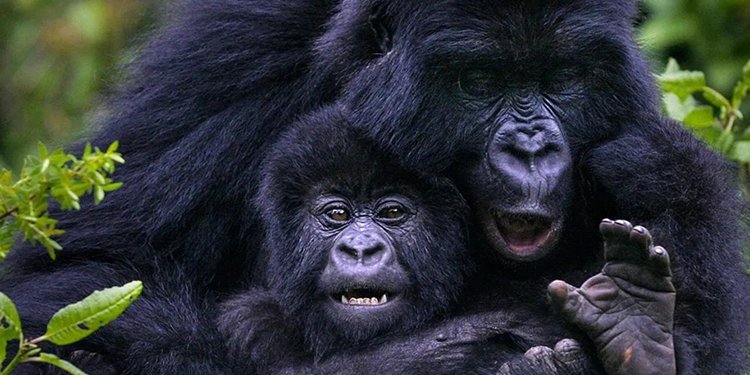
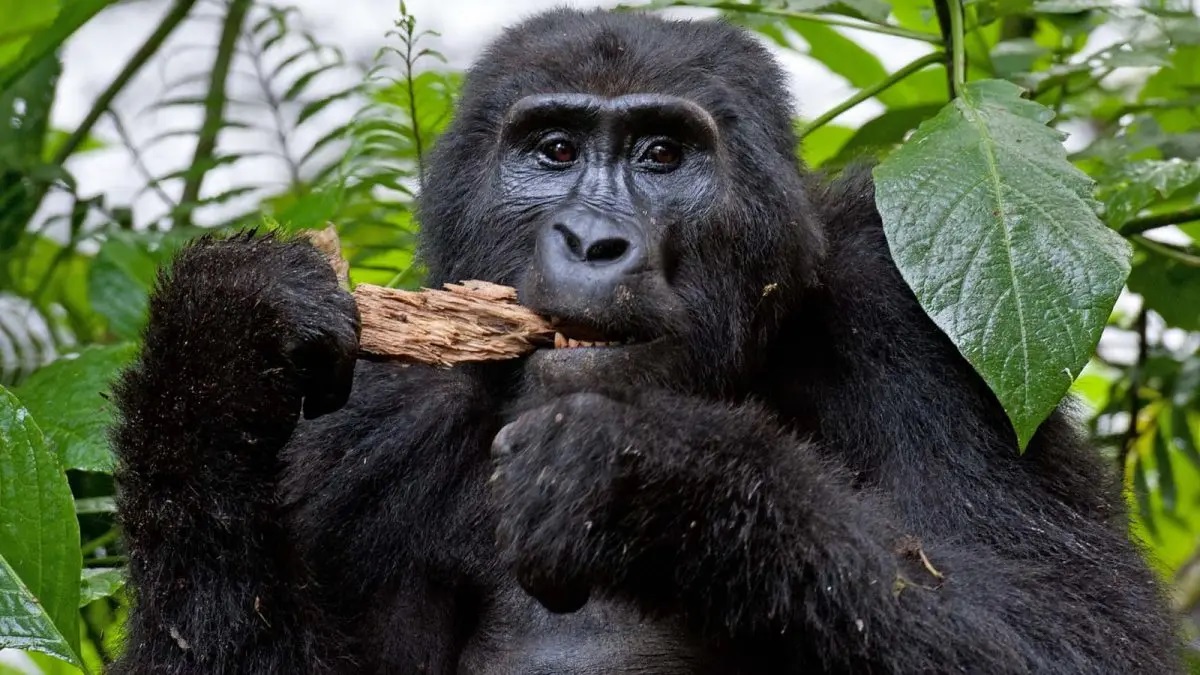
With a shrouded dark past behind it Rwanda in recent years has become an increasingly popular destination for tourists wishing to see the majestic mountain gorillas in the wild. This relatively recent development as a tourism destination means that the country is still very much unspoiled. Rwanda has everything from five star resorts to the big 5 national parks which majorly include Volcanes National Park, Nyungwe National Park, Akagera National Park, Virunga National Park etc all the way down to budget backpacker accommodation. Rwanda is not only home to the enigmatic mountain gorillas, but also another thirteen species of primate and a dazzling array of birds representing fully one third of Africa’s bird species.
Rwanda as a green and eco-friendly tourist destination, Rwanda is also a great place to hike, caving, and also go on safari with its famous national park being the Akagera National Park.
Rwanda’s territory in prehistoric times was occupied by one-third Montane forest. Naturally occurring vegetation is now mostly restricted to the three national parks, with terraced agriculture dominating the rest of the country. Nyungwe, the largest National Park has the remaining tract of forest which contains 200 species of tree as well as orchids and begonias, the Volcanoes National Parks vegetation is mostly bamboo and moorland with small areas of forestry. By contrast, Akagera has a savanna ecosystem in which acacia dominates the flora and fauna with several rare or endangered plant species.
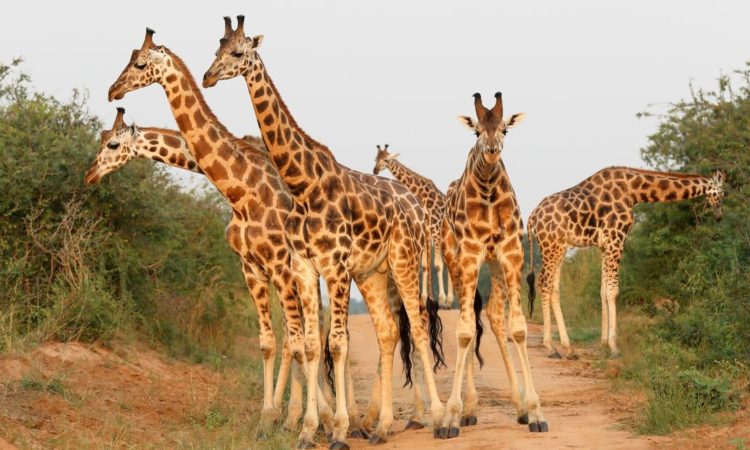
The greatest diversity of large mammals is found in the three national parks, which are designated conservation areas. Akagera contains typical savanna animals such as giraffes and elephants, while Volcanoes is home to an estimated one-third of the worldwide mountain gorilla population. Nyungwe Forest boasts thirteen primate species including common chimpanzees and Ruwenzori colobus arboreal monkeys; the Ruwenzori colobus move in groups of up to 400 individuals.
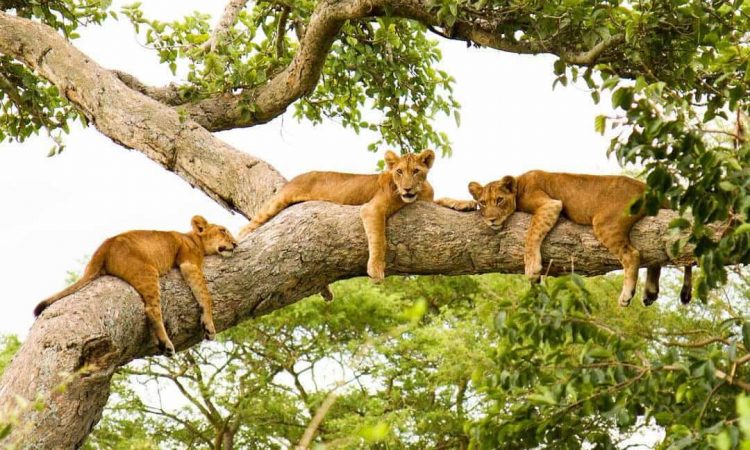
Rwanda’s population of lions was destroyed in the aftermath of the genocide of 1994, as national parks were turned into camps for displaced people and the remaining animals were poisoned by cattle herders. In June 2015, two South African parks donated seven lions to Akagera National Park, re-establishing a lion population in Rwanda. The lions were held initially in a fenced off area of the park and then collared and released into the wild a month later.
There are about 670 bird species in Rwanda, with variation between the east and the west. Nyungwe Forest, in the west, has about 280 recorded species, of which 26 are endemic to the Albertine Rift; endemic species include the Rwenzori turaco and handsome spurfowl. Eastern Rwanda, by contrast, features savanna birds such as the black-headed gonolek and those associated with swamps and lakes, including storks and cranes.
Recent entomological work in the country has revealed a rich diversity of praying mantises, including a new species Dystacta tigrifrutex, dubbed the “bush tiger mantis”.
Rwanda contains three terrestrial ecoregions: Albertine Rift montane forests, Victoria Basin forest-savanna mosaic, and Ruwenzori-Virunga montane moorlands.
Rwanda Safaris, Top Travellers Trips
From some of the world’s most wonderful wildlife to a particularly progressive capital, Rwanda is a diverse and different destination that ought to be on your bucket list. Here are some Rwanda Tours choices for your Rwanda Safari Planning.
Why you should visit Rwanda?
Kigali is considered one of the friendliest capital cities in Africa, and its metropolitan ambience is a great complement to your time in the Rwandan bush country. The population of the city is young, so you will find a diverse range of engaging activities blended with a bit of history and culture. As Rwanda continues to emerge from a tragic past, Kigali represents the future; it has become a thriving center for business and economic development, while maintaining its charming character.
Development has been well planned to preserve the natural contours of the surrounding hillsides. The city is divided into distinct districts, with one reserved for government and administrative buildings. In another district, the city center is surrounded by shops and markets.
In Kigali, a new treasure awaits around each corner as you travel the roads that wind through the city. You can learn about the country’s flora and fauna at the Kandt House (Natural History Museum), which features three sections, each highlighting an aspect of Rwanda’s ecological resources. Geology lovers immensely enjoy the displays in the back section of the museum, dedicated entirely to the country’s volcanism and the astonishing volcanoes in northwest Rwanda.
Discover the country’s evolving artists at Inema Art Center. Stop by Ivuka Arts Center to watch artists make their creations before enjoying a nice lunch at Heaven Restaurant, which is decorated with the artists’ work. Next, head over to Niyo Art Gallery to learn about how art is helping street children in Rwanda, and perhaps make a donation to support the education, medical care, and daily basic needs of less-fortunate Rwandans.
Support sustainable fair-trade tourism by purchasing traditional crafts such as drums, baskets, wood carvings, and ceramics at Capalaki Handicrafts Cooperative, and see local Twa people perform traditional dances at The Dancing Pots. Be sure to take a look at the Parliament Building and Presidential Palace, which contain so much of the country’s history, including debris from the presidential plane that was shot down on April 6, 1994, the catalyst for Rwanda’s darkest chapter.
People and Culture
The three cultures of Rwanda once clashed, largely over socio-economic differences, but today the Tutsi, Hutu, and Twa peoples represent a common commitment to the betterment of all Rwandan people.
Through unity, collaboration, and absolute dedication, the people of Rwanda take every measure to ensure that the fabric of their country is never again torn by genocide and other crimes against humanity. Meeting some of the people from these three tribes allows you to see the value of each of their cultures and their pride in the homeland.
Gorilla Safaris Uganda offers cultural tours that are sensitive to the preservation of Africa’s indigenous tribes, and all of our cultural activities are carefully coordinated with the local communities. Our goal is to provide our guests with authentic cultural engagements with Rwandan people while ensuring the privacy and respect that villagers need to maintain their cultural traditions. The activities allow villagers to share their culture, arts, beliefs, and much more, while providing a source of income that supports education, medical care, and other valuable resources.
At Ibyiwacu Village, outside Volcanoes National Park, our guests are greeted by an amazing presentation featuring traditional drumming and dancing coupled with warm, heartfelt Rwandan hospitality. You visit a replica of the king’s house, learn about traditional medicine, meet children at the local school, and even sample some delicious food and banana beer.
During your visit to Nyungwe National Park, take some time to explore Banda Village, in the heart of the park, and Kitabi Cultural Village, on the eastern edge of the park. With advance preparation, you can even stay overnight in the villages to see another side of day-to-day life here.
Families traveling with older children always find the cultural activities in Rwanda to be educational and interesting for the loved ones. Imagine the delight on your children’s faces when someone from an exotic tribe shows them how to weave a basket, shoot a bow, or create a ceramic pot!
Genocide Memorial
Delving into the tumultuous history of Rwanda is difficult for many guests; yet, seeing the genocide memorial sites first-hand provides valuable insight into the transformative journey of the Rwandan people.
Memorials from the 1994 genocide are scattered around the country and remain in the same state as when the tragedy was unfolding.
The Kigali Genocide Memorial Center provides visitors with a two- to three-hour orientation into the events that occurred at the site, where an over 259,000 victims lie buried.
We recommend this exhibit as your last stop after visiting other sites in the country. Each display is beautifully designed to tell the story of Rwanda in a poignant and moving way. The indoor museum provides a historical overview of the events that led up to the genocide, as well as displays dedicated to Rwandan children who were killed.
Another exhibit highlights the global issue of genocide, with displays that depict the Holocaust and similar tragedies in Bosnia, Southwest Africa, Cambodia, and Armenia.
In addition to the Tutsi, peoples from around the world were targeted around the same time the genocide took place. Camp Kigali Belgian Monument stands as a memorial to ten Belgian United Nations soldiers who were killed while protecting the prime minister. Their lives were taken to undermine international support that stood against the genocide. The Nyanza Genocide Memorial shows the next chapter in the genocide, after the Belgian soldiers were killed. The school was a hideout for 2,000 Tutsis, including 400 children, who were seized, taken to a nearby garbage dump, and murdered. Some of the most brutal killings occurred at two churches—Nyamata and Ntarama.
These memorials are some of the most shocking and deeply emotional of all the memorials in Rwanda. The skulls and bones unveil the story of those who were murdered. Blood-stained walls, pews draped with clothing, sharpened stakes, bullet holes, and small wood caskets reveal a vivid and deeply emotional chapter in Rwandan history.
The exhibits are so powerful that many guests find it difficult to reconcile the country’s past with the joy and warm-hearted hospitality that is Rwanda today—a contrast that is testament to the country’s dedication to defining and protecting a better future for all of its people.
Primates and more primates
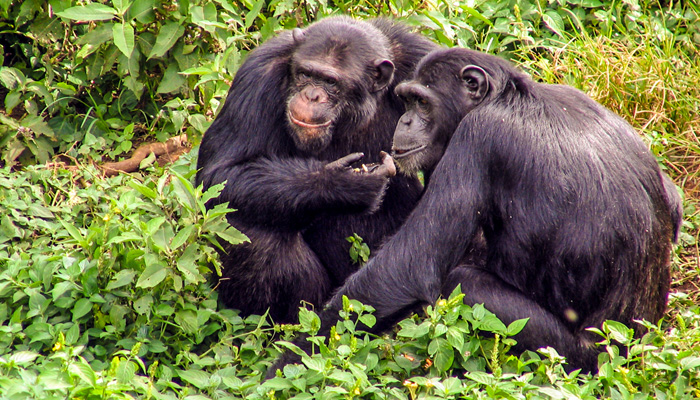
Mountain gorillas are the best-known of Rwanda’s primates, but the country offers many other scampering creatures to delight visitors, including chimpanzees, golden monkeys, blue monkeys, and black and white colobus. Chimpanzees are considered the most human-like of primates, and Nyungwe National Park is the premium destination in Rwanda for chimpanzee viewing experiences.
Just before daylight, you start a journey into the forests where families of chimps live in a natural habitat. The effort to find them makes for a wondrous combination of adventure and mystery as you follow the keen leadership of a professional guide, learning the nuances of tracking and locating these fast-moving animals.
Each day the groups of chimps move through the forest in search of food before finding a secluded place to build their nests and rest for the night. Fortunately, our guides are experts in locating the chimpanzees, so your chances of seeing them are very good.
Another primate species that thrills our guests is the golden monkey, a colorful species that constantly scampers through the treetops, stopping only to dine upon fruits and leaves. The golden monkeys of Rwanda can be found in the incredible bamboo forests of Volcanoes Park, as well as Gishwati-Mukura Forest in the northwestern part of the country.
Unconfirmed sightings have also been reported in Nyungwe Forest. Another of the 14 primate species in Rwanda, many of which are endemic and endangered, are the black and white colobus monkeys that live in groups of over 300, the largest of their kind on the continent.
Hikes through the deep African rainforest to find the colobus can be challenging for some guests. During your primate treks, you may also come across blue monkeys, grey-cheeked mangabeys, vervet monkeys, Dent’s monkeys, L’Hoest’s monkeys, and red-tailed monkeys.
Leave a Reply